Over the past two decades, research has shifted from viewing the DMN as passive to recognising it as a core system supporting complex and abstract cognition. How does it work, and why is it of such interest? Understanding this network sheds valuable light on the way we think, remember and perceive ourselves.
Inside the Default Mode Network: brain functions and key regions
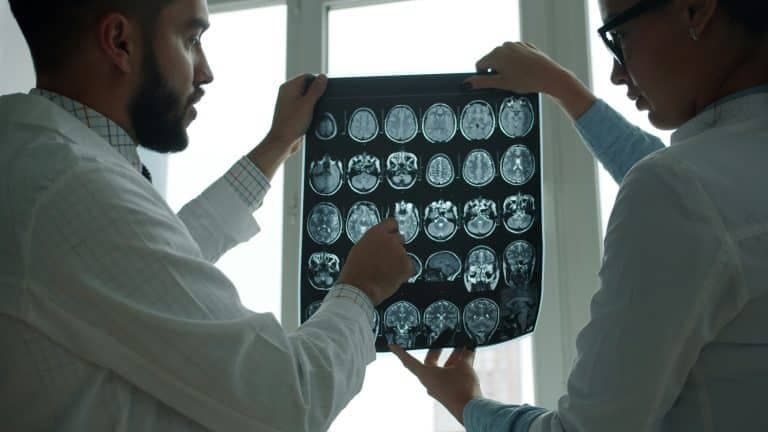
When your mind wanders, reflects or dwells on past experiences, your brain is far from being idle, absent or elsewhere. In fact, a specific network becomes particularly active at such times: the Default Mode Network.
Context.
01
What is the Default Mode Network?
DEFINITION.
The Default Mode Network (DMN) is a set of interconnected brain regions, including the medial prefrontal cortex, the posterior cingulate cortex and the angular gyrus, that shows coordinated activity when you aren't engaged in externally focused tasks, such as during rest, mind-wandering and self-reflection. Although it was first identified through increased activity during rest, this definition of the DMN is now considered incomplete. Contemporary research shows that the Default Mode Network is engaged in high-level, abstract cognition, whether your attention is directed inward or outward [1]. Rather than being defined by rest, the DMN brain network is better understood as a system that supports transmodal processing, integrating information beyond immediate sensory input and enabling more abstract forms of thinking.
DISCOVERY.
The discovery of the DMN wasn't a single breakthrough event, but the result of progressive findings across a decade. In the late 1990s, studies observed consistent decreases in activity across specific brain regions during goal-directed tasks [2]. These task-induced deactivations suggested that certain regions were more active during rest than during tasks. In 2001, Marcus Raichle and his colleagues formalised the concept as a "default mode of brain function" [3]. Recent analyses emphasise that the DMN concept reflects a broader shift in neuroscience, from localised brain functions to distributed network organisation [4].
BRAIN REGIONS.
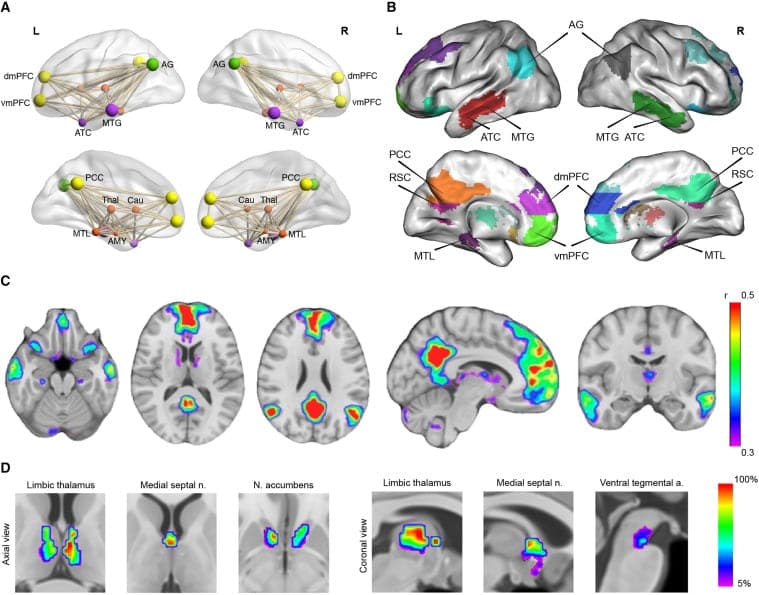
The DMN comprises several core regions:
medial prefrontal cortex (mPFC);
posterior cingulate cortex (PCC) and precuneus;
inferior parietal lobule (including angular gyrus);
medial temporal lobe structures (including the hippocampus).
Subsystems [5]:
a medial temporal subsystem involved in memory and mental simulation;
a medial prefrontal subsystem supporting self-related and social cognition;
a core hub (PCC/precuneus) integrating information across the network.
02
Why is the Default Mode Network important?
AGING.
The Default Mode Network function undergoes significant changes across our lifespan, both in healthy aging and in pathological aging. Research has shown that functional connectivity within the DMN tends to decrease with increasing age. Among this tendency, patients with Alzheimer's exhibit marked reductions in DMN connectivity, correlating with memory decline and disease severity. This suggests that altered DMN patterns may serve as a biomarker for early cognitive impairment [7]. Longitudinal research also indicates that the trajectory of DMN connectivity may vary across different stages of the adult lifespan, with possible early increases followed by more pronounced declines in later decades [8]. These findings support the view that aging is associated with a reconfiguration of DMN connectivity rather than a simple linear decline and highlight how changes in network function relate to age-related cognitive differences.
IMPORTANCE.
The Default Mode Network supports the ability to:
construct a sense of self;
understand others;
navigate complex situations;
simulate future possibilities.
From a neurocognitive perspective, the DMN brain network is composed of high-order brain regions that are functionally distant from primary sensory systems, enabling it to process information at a highly abstract level [1]. Abnormalities in the Default Mode Network have been linked to a variety of mental health disorders. By studying the DMN, we gain insights into the neural mechanisms behind cognition and behavior, which could help develop better therapeutic strategies for a range of neuropsychiatric conditions [9].
03
Functions of the Default Mode Network
SELF-REFERENTIAL THINKING.
The DMN is strongly engaged when you reflect on yourself, your experiences, your identity or your emotions. The medial prefrontal cortex, in particular, is consistently associated with self-related processing. For example, when you replay a conversation in your head and wonder "Did I say the right thing?", your DMN is actively processing self-related information. It helps you evaluate your behaviour and build a coherent sense of who you are over time. However, its role extends beyond introspection to include social cognition, helping you understand other people's perspectives and intentions.
MEMORY.
The DMN supports episodic memory (your ability to recall past events) and prospection (imagining future scenarios). The hippocampus works in coordination with other DMN regions to reconstruct experiences and simulate possibilities. For instance, when you picture an upcoming meeting or mentally rehearse a difficult conversation, your brain isn't simply retrieving memories, it's recombining past experiences to simulate possible outcomes. This ability is essential for planning, decision-making and adapting to new situations. Research shows that the DMN integrates memory and semantic knowledge to build what can be described as an internal narrative of your experience [6].
MIND-WANDERING.
The DMN supports self-generated thought, including daydreaming, reflective thinking and creative ideation. We often view these processes as random or insignificant, yet they are far from useless. When your attention drifts during a walk or while driving, your brain may be:
connecting ideas;
solving problems in the background;
generating new perspectives.
Importantly, recent research shows that the DMN can also contribute to goal-directed cognition, particularly when tasks require abstraction or integration of prior knowledge [10].
04
DMN overactivity and modulation
OVERACTIVITY.
Rather than simple overactivity, current research focuses on dysregulation of network dynamics. Altered DMN connectivity has been associated with conditions such as depression, anxiety and ADHD. In these cases, the issue is often linked to excessive self-focus or difficulty disengaging from internal thoughts. However, these effects are better explained by impaired coordination between the DMN and other brain networks, particularly those involved in attention and executive control, rather than dysfunction of the DMN alone.
MODULATION.
Several approaches can modulate DMN activity:
cognitive demands (task engagement vs abstraction);
mindfulness-based cognitive therapy and meditation;
neurofeedback and neuromodulation approaches.
The goal isn't to suppress the DMN, but rather to enhance flexibility between different modes of cognition, enabling adaptive behaviour.
RESEARCH METHODS.
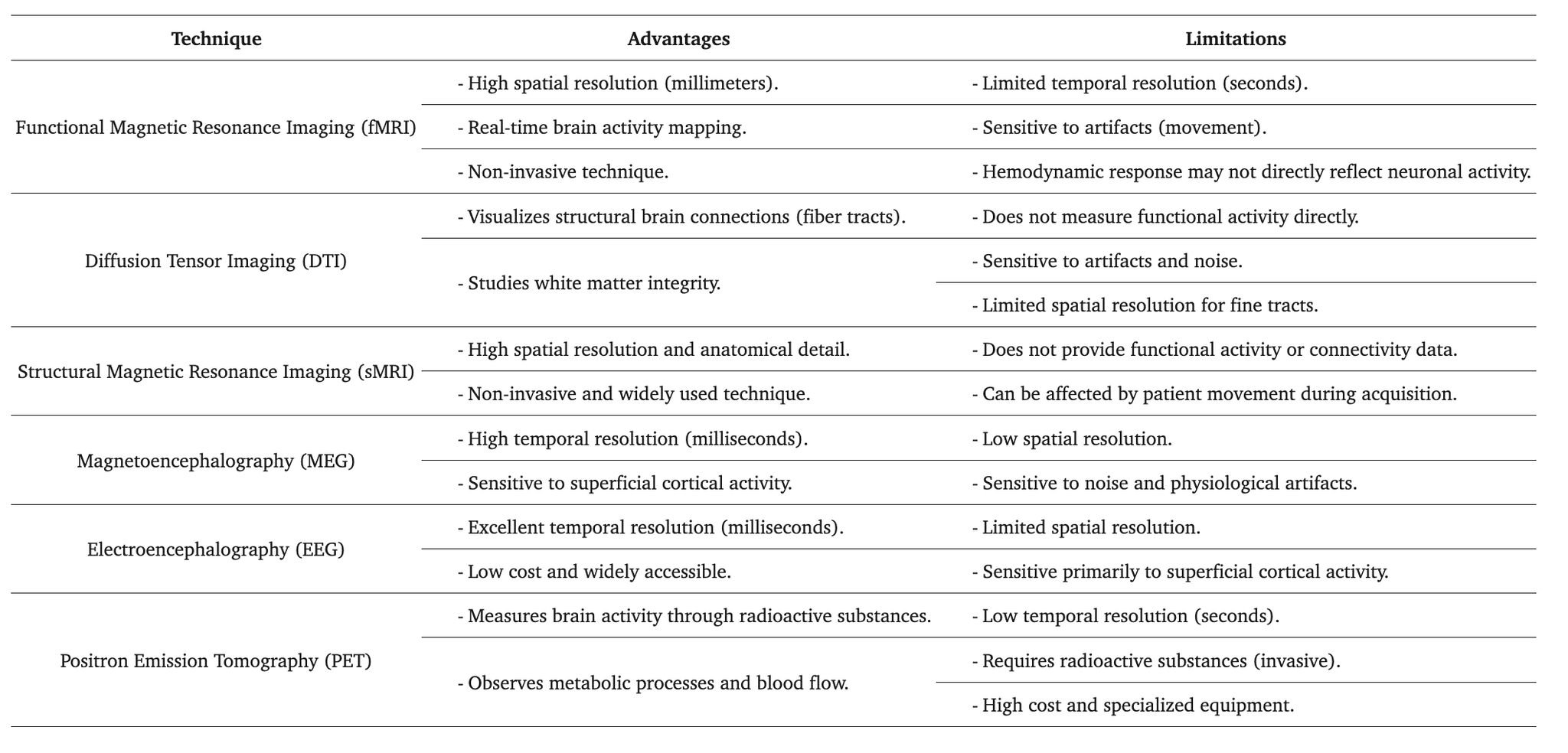
Studying the DMN relies on a range of neuroimaging and electrophysiological techniques:
functional MRI (fMRI) to measure brain activity and identify co-activation patterns;
resting-state connectivity analyses (using techniques such as fMRI or EEG) to map how DMN regions are functionally linked;
EEG and MEG to examine the timing and dynamics of neural activity;
diffusion imaging (DTI) to explore structural connections between regions;
structural MRI (sMRI) to provide detailed anatomical information;
positron emission tomography (PET) to assess metabolic activity and blood flow;
computational models to understand how information flows within the network.
05
Neuromind's approach to DMN research
APPROACH.
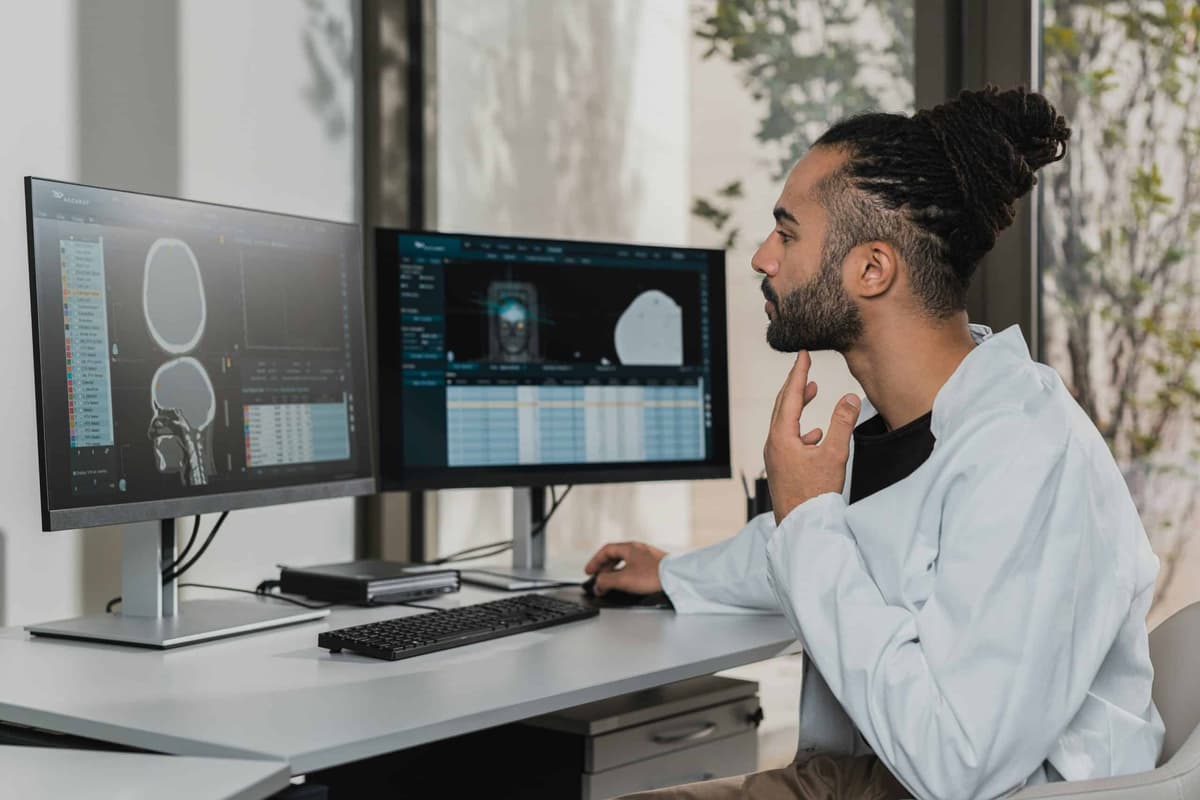
Neuromind's approach integrates multiple technologies:
physiological signals such as eye-tracking and pupillometry;
evidence-based cognitive therapies (neurofeedback training, mindfulness induction, emotional and attentional control);
EEG-based biomarkers;
ECG and EDA biomarkers of autonomic nervous system;
immersive environments;
real-time interpretation of brain activity using proprietary machine learning algorithms.
RESULTS.
These elements are integrated into a closed-loop system, where the virtual environment adapts continuously to the user's brain state. Our approach allows us to move beyond passive observation of brain networks and instead interact with them dynamically, in a way that is measurable, personalised and scalable. Our recent study results indicate that the use of our product was associated with a decrease in Default Mode Network connectivity, alongside improvements in sustained and spatial attention. In addition to these cognitive changes, participants reported a greater sense of calm, improved focus and enhanced control throughout the experience.
Explore how these principles are being applied to specific conditions: depression treatment and addiction treatment. See all use cases or contact us to arrange a demonstration.
The Default Mode Network is a group of brain regions that work together when your mind isn't focused on a specific task. It's involved in thinking about yourself, recalling memories and imagining future situations. Rather than being inactive, your brain is highly engaged during these moments. This network helps organise internal thoughts into a coherent mental experience.
References
[1] Jonathan Smallwood, Boris Bernhardt, Robert Leech, Danilo Bzdok, Elizabeth Jefferies, et al. The default mode network in cognition: a topographical perspective. Nature Reviews Neuroscience, 2021, 22 (8), pp.503-513.
[2] Shulman GL, Fiez JA, Corbetta M, Buckner RL, Miezin FM, Raichle ME, Petersen SE. Common Blood Flow Changes across Visual Tasks: II. Decreases in Cerebral Cortex. J Cogn Neurosci. 1997 Fall;9(5):648-63.
[3] Raichle ME, MacLeod AM, Snyder AZ, Powers WJ, Gusnard DA, Shulman GL. A default mode of brain function. Proc Natl Acad Sci U S A. 2001 Jan 16;98(2):676-82.
[4] Alves PN, Foulon C, Karolis V, Bzdok D, Margulies DS, Volle E, Thiebaut de Schotten M. An improved neuroanatomical model of the default-mode network reconciles previous neuroimaging and neuropathological findings. Commun Biol. 2019 Oct 10;2:370.
[5] Andrews-Hanna JR, Smallwood J, Spreng RN. The default network and self-generated thought: component processes, dynamic control, and clinical relevance. Ann N Y Acad Sci. 2014 May;1316(1):29-52.
[6] Vinod Menon, 20 years of the default mode network: A review and synthesis, Neuron, Volume 111, Issue 16, 2023, Pages 2469-2487.
[7] Jones DT, Machulda MM, Vemuri P, McDade EM, Zeng G, Senjem ML, Gunter JL, Przybelski SA, Avula RT, Knopman DS, Boeve BF, Petersen RC, Jack CR Jr. Age-related changes in the default mode network are more advanced in Alzheimer disease. Neurology. 2011 Oct 18;77(16):1524-31.
[8] Staffaroni AM, Brown JA, Casaletto KB, Elahi FM, Deng J, Neuhaus J, Cobigo Y, Mumford PS, Walters S, Saloner R, Karydas A, Coppola G, Rosen HJ, Miller BL, Seeley WW, Kramer JH. The Longitudinal Trajectory of Default Mode Network Connectivity in Healthy Older Adults Varies As a Function of Age and Is Associated with Changes in Episodic Memory and Processing Speed. J Neurosci. 2018 Mar 14;38(11):2809-2817.
[9] Azarias FR, Almeida GHDR, de Melo LF, Rici REG, Maria DA. The Journey of the Default Mode Network: Development, Function, and Impact on Mental Health. Biology (Basel). 2025 Apr 10;14(4):395.
[10] Weber S, Aleman A, Hugdahl K. Involvement of the default mode network under varying levels of cognitive effort. Sci Rep. 2022 Apr 15;12(1):6303.
Contact. If you would like further information or a demonstration of our solution, please contact us using the following link