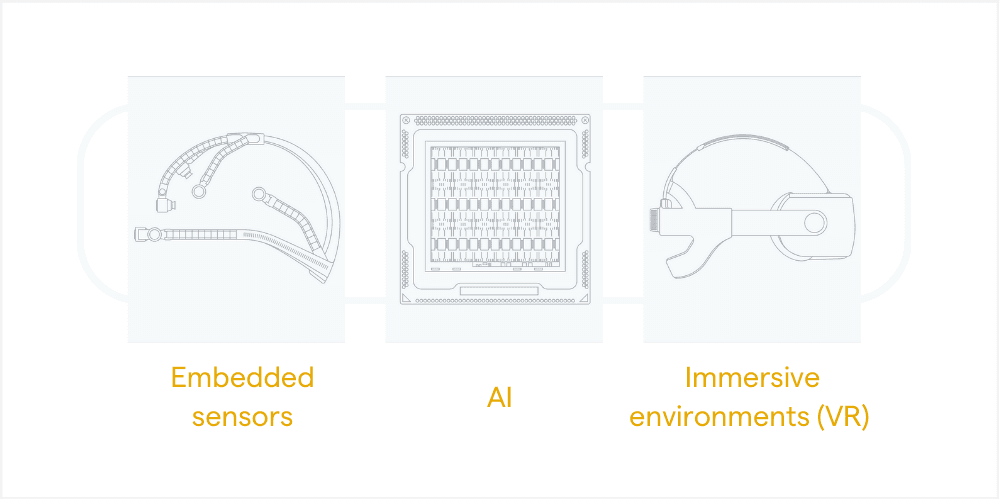
Neurofeedback VRcombines two complementary approaches: EEG-based neurofeedback and immersive virtual reality environments. Together, they create a closed-loop system in which your brain activity directly influences what you see and experience. How does this work and what does current research say about their pairing? That’s what we are going to explore.
Why combining neurofeedback and VR?
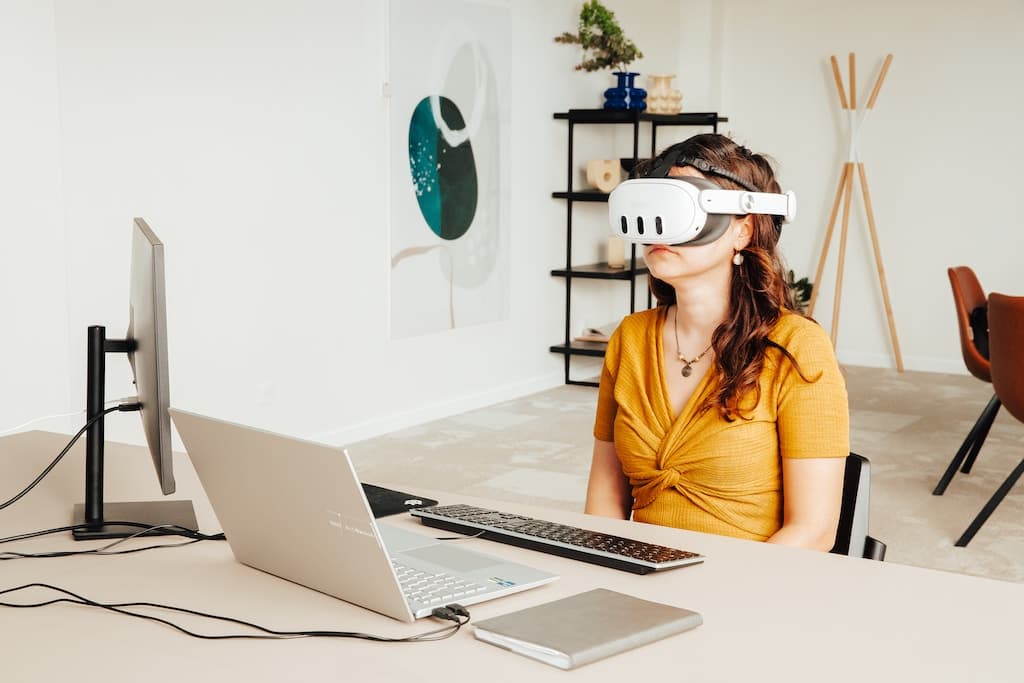
Do you know the benefits of neurofeedback VR? Find out why virtual reality and neurofeedback make a powerful combination for therapy and research.
Overview.
Key takeaways.
Neurofeedback provides real-time feedback on brain activity through EEG, helping users learn self-regulation.
Virtual reality adds immersion, presence and realistic scenarios that make brain training more engaging.
The combination of neurofeedback and VR creates a closed-loop system where the user’s mental state directly shapes the environment.
Neurofeedback VR’s applications include anxiety management, ADHD, cognitive performance and neurorehabilitation.
Early research shows promising results, but large-scale evidence is still emerging.
01
What is neurofeedback VR?
A scientific overview of neurofeedback.
Neurofeedback, also known as EEG biofeedback, is a technique that enables individuals to self-regulate their brain activity. It relies on electroencephalography (EEG) to measure electrical signals produced by neuronal activity in real time.
These signals are analysed and translated into feedback (visual, auditory or both) allowing users to gradually learn how to modulate specific brain patterns. This process is based on operant conditioning: when a desirable brain activity is detected, it’s reinforced through positive feedback.
Over the past decades, neurofeedback has been explored in a range of contexts, including attention disorders, anxiety regulation and performance optimisation. While results vary depending on protocols and populations, it’s generally considered a promising tool for supporting self-regulation and cognitive training.
Recent studies combining neurofeedback with mindfulness practices suggest that this approach may also enhance self-awareness and emotional regulation [1][2].
What virtual reality adds to brain training.
Virtual reality introduces a key dimension that traditional neurofeedback lacks: immersion. By placing the user in a simulated yet realistic environment, VR creates a strong sense of presence, the feeling of “being there”.
This immersion has several implications for brain training:
increases attentional engagement by reducing external distractions;
allows the creation of controlled, repeatable scenarios;
enables interactions since brain activity influences the environment.
In therapeutic contexts, virtual reality has already shown value in exposure therapy for anxiety disorders and in rehabilitation. Early systems combining EEG and VR have demonstrated the feasibility of immersive neurofeedback, particularly in meditation-based environments [3][4].
To go further, discover a scientific study focused on predicting the response to VR anxiety therapy.
02
Neurofeedback VR: why does this partnership work?
1. Stronger engagement and motivation.
One of the main challenges in neurofeedback training is maintaining engagement over time. Traditional interfaces can feel repetitive or abstract, which may reduce motivation. Virtual reality profoundly transforms this experience.
By introducing immersive, interactive environments, it makes training more engaging and intuitive. Users are no longer observing feedback, they are experiencing it. This increased engagement can lead to better adherence to training protocols, which is a critical factor in achieving meaningful outcomes.
A systematic review found that immersive environments improve engagement and adherence in neurofeedback protocols [5]. Similarly, another research highlighted that user experience is a key factor in brain-computer interface performance [6].
2. Enhanced learning through immersion.
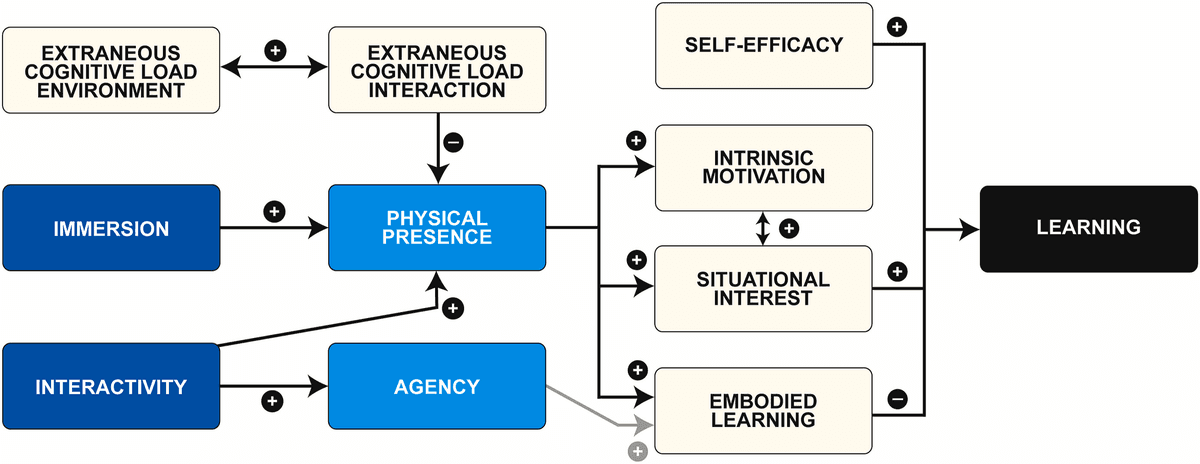
Learning is more effective when it involves multiple sensory channels. VR environments stimulate visual, auditory and sometimes even proprioceptive systems, creating a richer context.
In neurofeedback VR, this multisensory stimulation reinforces the association between brain states and feedback. As a result, the brain may encode these patterns more efficiently, supporting faster or more robust learning.
A sham-controlled study showed that enriched feedback environments may improve neurofeedback performance [7]. In addition, another research demonstrated that immersive VR can enhance learning outcomes by increasing cognitive engagement [8].
Immersive mindfulness-based VR experiences have also been shown to support self-regulation and pain modulation, highlighting the potential of combining embodiment and attention training [9].
3. Better transfer to real-life situations.
A common limitation of traditional neurofeedback is the difficulty of transferring learned skills to everyday life. Training often takes place in artificial settings that don’t reflect real-world conditions.
Virtual reality addresses this issue by simulating realistic environments. Research emphasises that VR provides high ecological validity, allowing users to train in contexts that resemble real-world situations [10]. This increases the likelihood that acquired skills will generalise beyond training sessions.
4. Real-time personalised environments.
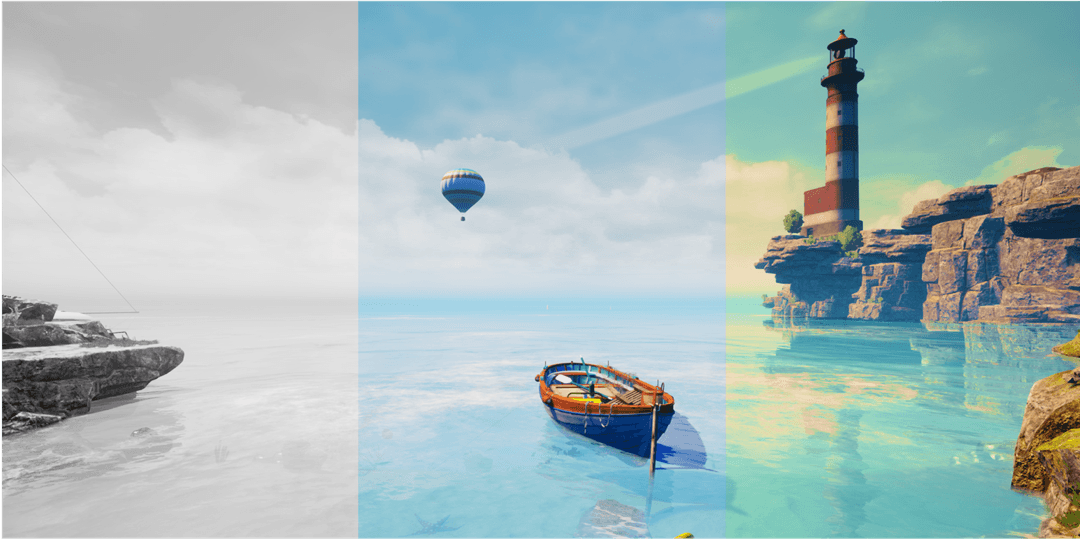
Neurofeedback VR systems can dynamically adapt the environment based on the user’s brain activity. This creates a highly personalised training experience.
For example, as the user reaches a more regulated or focused state, the environment may become clearer. Conversely, signs of stress or distraction can trigger subtle changes that guide the user back towards the desired state.
An article highlighted that adaptive feedback is a key factor in improving neurofeedback outcomes [11]. By dynamically adjusting the environment, neurofeedback VR can provide tailored and responsive training conditions.
Feasibility studies combining VR, EEG and intelligent systems also suggest that such adaptive environments can influence both emotional and cognitive processes, particularly in ageing populations [12].
03
Clinical and practical applications of neurofeedback virtual reality
Anxiety and stress regulation.
Neurofeedback VR provides a safe and controlled environment to explore and regulate stress responses. By combining physiological feedback with immersive scenarios, it allows the user to become more aware of his internal states and learn how to modulate them. This approach may be particularly useful in situations where traditional exposure is difficult or impractical.
A pilot study reported reductions in anxiety symptoms following VR-based neurofeedback sessions [13]. Additionally, a review showed that VR environments can effectively induce and regulate emotional states, making them suitable for stress management interventions [14].
Mindfulness-based neurofeedback approaches, including fMRI and EEG protocols, have also shown potential in modulating emotional regulation networks, particularly in individuals with affective disorders [15][16].
ADHD and attention disorders.
In attention-related conditions, maintaining focus over time can be challenging. Neurofeedback VR introduces engaging tasks that require sustained attention, while providing real-time feedback on brain activity. This combination may help reinforce attentional control in a more motivating and context-rich way.
A meta-analysis demonstrated that neurofeedback can improve attention and impulsivity [17]. Another open-label pilot study showed that EEG-based training can enhance attentional performance [18]. VR integration may further improve engagement and adherence, particularly in the case of attention deficit hyperactivity disorder (ADHD).
Cognitive training and performance.
Beyond clinical applications, neurofeedback VR can be used to support cognitive performance. This includes areas such as concentration, mental flexibility and stress resilience.
The immersive nature of VR makes it possible to design targeted training scenarios that reflect real-world demands, whether in professional, academic or high-performance contexts.
A review reported improvements in attention, working memory and aspects of creativity in healthy participants following neurofeedback training [19]. In parallel, another research showed that immersive VR enhances learning and cognitive engagement, supporting its use in performance contexts [20].

Neurorehabilitation.
In neurorehabilitation, the integration of feedback and immersive environments offers promising perspectives. Neurofeedback VR can support recovery processes by encouraging active participation and providing meaningful, adaptive feedback.
Although research is still developing, this approach is being explored in contexts such as stroke rehabilitation and brain injury.
A review demonstrated the potential of VR in motor rehabilitation after a stroke [21]. Additionally, studies on neurofeedback suggest benefits in brain recovery processes, although combined approaches remain under investigation.
04
What does scientific research say about neurofeedback VR?
Evidence.
Research on neurofeedback VR is an emerging field. While the individual components, neurofeedback and virtual reality, have been studied extensively, their combination is still being explored.
Early studies, including pilot and feasibility trials, suggest several potential benefits. These include:
increased engagement;
improved user experience;
promising effects on cognitive and emotional outcomes.
Recent experimental systems combining immersive VR, neurofeedback and meditation paradigms further support the feasibility of closed-loop emotional regulation training in ecologically valid environments [3][12].
Limitations.
However, current evidence remains limited. Many studies involve small sample sizes, and protocols can vary significantly. This makes it difficult to draw definitive conclusions at this stage.
Further research, particularly large-scale randomised controlled trials, will be essential to better understand the effectiveness, optimal protocols and long-term impact of neurofeedback VR.
05
How Neuromind delivers real-time neurofeedback in immersive virtual environments
Approach.
For several years, we have been developing a new generation of digital therapies that combine neurofeedback and virtual reality to address chronic conditions.
Neuromind is built on a simple yet powerful principle: providing real-time neurofeedback based on brain activity within a controllable and immersive virtual environment. By integrating neuroscience, immersive technologies and evidence-based approaches such as mindfulness, our solution aims to support more effective and personalised regulation of mental states.
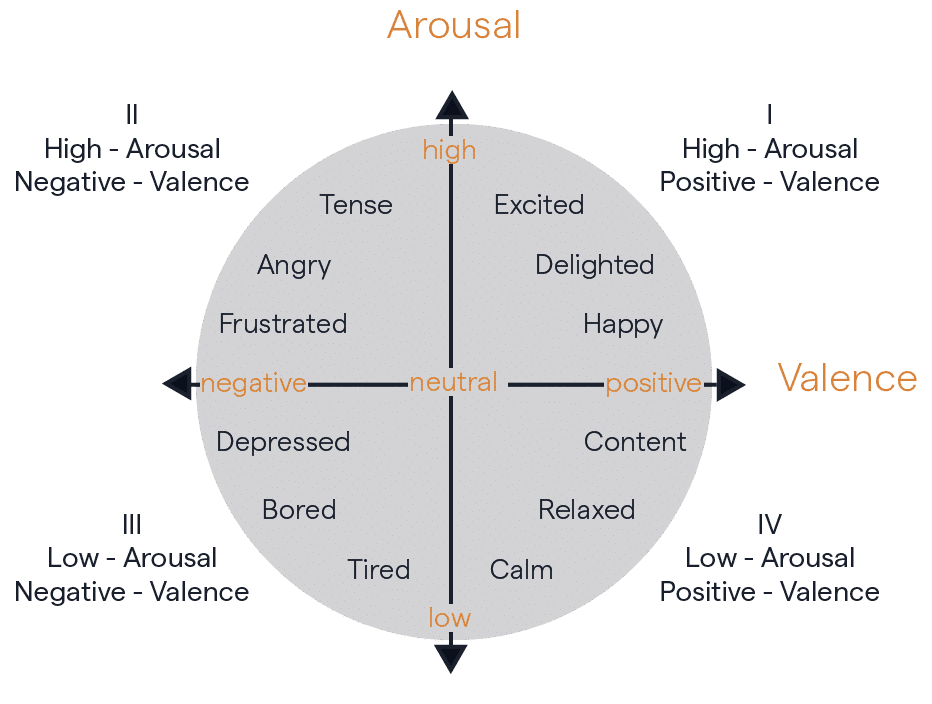
At the core of Neuromind lies an advanced approach to brain-computer interaction. The system can be described as an affective brain-computer interface (aBCI), designed not only to monitor brain activity, but also to interpret emotional and cognitive states in real time.
To achieve this, Neuromind relies on a multi-modal data approach, combining EEG signals with additional physiological markers, such as cardiovascular activity or eye-tracking. These signals are used to derive biomarkers related to key dimensions of emotional experience:
arousal (level of activation);
valence (positive or negative emotional states).
This enables the creation of a dynamic emotional mapping system, where changes in your internal state are continuously reflected in the virtual environment.
Vision.
As the field of digital therapeutics evolves, we believe that combining neuroscience and immersive technologies offers a promising path towards more personalised and effective interventions. If you would like to learn more about our neurofeedback VR solution or request a demo, please contact us.
Neurofeedback VR shows promising potential, particularly in terms of engagement and user experience. Early research suggests positive effects on cognitive and emotional regulation, but more large-scale studies are needed to confirm its effectiveness.
References
[1] T. Chow, T. Javan, T. Ros, and P. Frewen, EEG Dynamics of Mindfulness Meditation Versus Alpha Neurofeedback: a Sham-Controlled Study, Mindfulness, vol. 8, no. 3, pp. 572–584, Jun. 2017, doi: 10.1007/s12671-016-0631-8.
[2] H. Hunkin, D. L. King, and I. T. Zajac, EEG Neurofeedback During Focused Attention Meditation: Effects on State Mindfulness and Meditation Experiences, Mindfulness, vol. 12, no. 4, pp. 841–851, Apr. 2021, doi: 10.1007/s12671-020-01541-0.
[3] I. Kosunen, M. Salminen, S. Järvelä, A. Ruonala, N. Ravaja, and G. Jacucci, RelaWorld: Neuroadaptive and Immersive Virtual Reality Meditation System, Proceedings of the 21st International Conference on Intelligent User Interfaces, ACM, Mar. 2016, pp. 208–217. doi: 10.1145/2856767.2856796.
[4] A. Choo and A. May, Virtual mindfulness meditation: Virtual reality and electroencephalography for health gamification, 2014 IEEE Games Media Entertainment, IEEE, Oct. 2014, pp. 1–3. doi: 10.1109/GEM.2014.7048076.
[5] Castanho L, Martinho DV, Saial AC, Gouveia BR, Gouveia ÉR, Ribeiro F. The Efficacy of Virtual Reality-Based EEG Neurofeedback in Health-Related Symptoms Relief: A Systematic Review. Appl Psychophysiol Biofeedback. 2025 Dec;50(4):613-633. doi: 10.1007/s10484-025-09730-0.
[6] Lotte F, Larrue F, Mühl C. Flaws in current human training protocols for spontaneous Brain-Computer Interfaces: lessons learned from instructional design. Front Hum Neurosci. 2013 Sep 17;7:568. doi: 10.3389/fnhum.2013.00568.
[7] Berger LM, Wood G, Kober SE. Effects of virtual reality-based feedback on neurofeedback training performance—A sham-controlled study. Front Hum Neurosci. 2022 Aug 12;16:952261. doi: 10.3389/fnhum.2022.952261.
[8] Gustav Bøg Petersen, Giorgos Petkakis, Guido Makransky, A study of how immersion and interactivity drive VR learning, Computers & Education, Volume 179, 2022, 104429, ISSN 0360-1315.
[9] X. Tong, D. Gromala, A. Choo, A. Amin, and C. Shaw, The Virtual Meditative Walk: An Immersive Virtual Environment for Pain Self-modulation Through Mindfulness-Based Stress Reduction Meditation, Virtual, Augmented and Mixed Reality, vol. 9179, Springer, 2015, pp. 388–397. doi: 10.1007/978-3-319-21067-4_40.
[10] Parsons TD. Virtual Reality for Enhanced Ecological Validity and Experimental Control in the Clinical, Affective and Social Neurosciences. Front Hum Neurosci. 2015 Dec 11;9:660. doi: 10.3389/fnhum.2015.00660.
[11] Berger, L.M.; Wood, G.; Kober, S.E. User Experience in Neurofeedback Applications Using AR as Feedback Modality. Computers 2024, 13, 110.
[12] M. Cuesta et al., Virtual Reality and EEG-Based Intelligent Agent in Older Adults With Subjective Cognitive Decline: A Feasibility Study for Effects on Emotion and Cognition, Front. Virtual Real., vol. 2, p. 807991, Jan. 2022, doi: 10.3389/frvir.2021.807991.
[13] Tarrant J, Viczko J and Cope H (2018) Virtual Reality for Anxiety Reduction Demonstrated by Quantitative EEG: A Pilot Study. Front. Psychol. 9:1280. doi: 10.3389/fpsyg.2018.01280.
[14] Claudia Repetto, Giuseppe Riva, From virtual reality to interreality in the treatment of anxiety disorders, February 2011. Neuropsychiatry 1(1):31-43.
[15] P. A. Bloom et al., Mindfulness-based real-time fMRI neurofeedback: a randomized controlled trial to optimize dosing for depressed adolescents, BMC Psychiatry, vol. 23, no. 1, p. 757, Oct. 2023, doi: 10.1186/s12888-023-05223-8.
[16] J. Zhang et al., Reducing default mode network connectivity with mindfulness-based fMRI neurofeedback: a pilot study among adolescents with affective disorder history, Mol. Psychiatry, vol. 28, no. 6, pp. 2540–2548, Jun. 2023, doi: 10.1038/s41380-023-02032-z.
[17] Arns M, de Ridder S, Strehl U, Breteler M, Coenen A. Efficacy of neurofeedback treatment in ADHD: the effects on inattention, impulsivity and hyperactivity: a meta-analysis. Clin EEG Neurosci. 2009 Jul;40(3):180-9. doi: 10.1177/155005940904000311.
[18] Escolano C, Navarro-Gil M, Garcia-Campayo J, Congedo M, Minguez J. The effects of individual upper alpha neurofeedback in ADHD: an open-label pilot study. Appl Psychophysiol Biofeedback. 2014 Dec;39(3-4):193-202. doi: 10.1007/s10484-014-9257-6.
[19] Gruzelier JH. EEG-neurofeedback for optimising performance. I: a review of cognitive and affective outcome in healthy participants. Neurosci Biobehav Rev. 2014 Jul;44:124-41. doi: 10.1016/j.neubiorev.2013.09.015.
[20] Guido Makransky, Gustav Bøg Petersen, Investigating the process of learning with desktop virtual reality: A structural equation modeling approach, Computers & Education, Volume 134, 2019, Pages 15-30, ISSN 0360-1315.
[21] da Silva Cameirão M, Bermúdez I Badia S, Duarte E, Verschure PF. Virtual reality based rehabilitation speeds up functional recovery of the upper extremities after stroke: a randomized controlled pilot study in the acute phase of stroke using the rehabilitation gaming system. Restor Neurol Neurosci. 2011;29(5):287-98. doi: 10.3233/RNN-2011-0599.
[22] Russell, J. A. (1980). A circumplex model of affect. Journal of Personality and Social Psychology, 39(6), 1161–1178.
Contact. If you would like further information or a demonstration of our solution, please contact us using the following link